If a dentist recommends a root canal for one of your teeth, there’s no reason to panic. Modern root canal therapy is a carefully controlled, minimally invasive procedure designed to stop pain, eliminate infection, and keep your natural tooth in the mouth whenever possible. Advances in instruments, anesthesia, and imaging have made treatment more predictable and comfortable than ever.
At the office of Riverbend Family Dental, we prioritize clear explanations, gentle techniques, and thoughtful restoration so treated teeth can function for years to come. Our goal is to help you understand why a root canal is recommended, what the procedure involves, and how to protect the tooth afterward so you can make confident decisions about your care.
When the soft tissue inside a tooth — the dental pulp — becomes inflamed or infected, the options are usually to perform root canal therapy or to extract the tooth. Preserving a natural tooth maintains chewing efficiency, supports neighboring teeth, and helps prevent the bone loss that can follow extraction. For those reasons, dentists commonly recommend root canal treatment when the pulp cannot be saved by less invasive measures.
Root canal therapy removes the damaged or infected material from the tooth’s interior, disinfects the canal system, and seals it to prevent reinfection. With appropriate restoration, most treated teeth can continue to function for many years. This approach preserves your bite, maintains facial structure, and often requires less overall treatment than replacing a missing tooth later.
Because the procedure addresses the source of pain and infection directly, root canal therapy frequently provides rapid relief, allowing patients to return to normal eating and speaking within days. Today’s techniques aim to be efficient and comfortable: better imaging, magnification, and biocompatible materials contribute to reliable outcomes and predictable recovery.

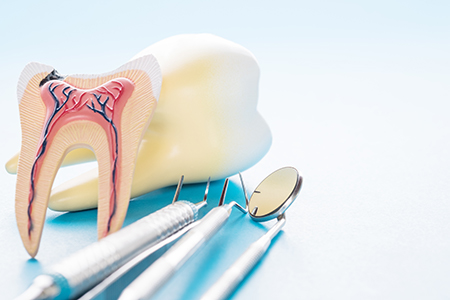
Teeth are more than the hard surfaces you see. Beneath enamel and dentin lies the pulp, a soft bundle of nerves and blood vessels that supports development and alerts you when something is wrong. When decay, a fracture, or an injury reaches that inner chamber, bacteria can invade and cause inflammation or infection. That process is what typically leads to the need for root canal therapy.
Symptoms vary depending on how the pulp and surrounding tissues are affected. Some people experience sharp, lingering pain when chewing or consuming hot or cold foods. Others notice a persistent dull ache, swelling around the gum, or a tooth that darkens over time. In some cases a tooth with a failing pulp shows little or no pain yet demonstrates radiographic signs of infection — which is why regular exams and x-rays are so valuable.
Identifying the cause and extent of pulp involvement requires a careful clinical exam and targeted imaging. Once the diagnosis is made, your dentist will explain why a root canal is recommended, how it can resolve infection and pain, and what type of final restoration (for example, a crown) best protects the tooth long-term.
Not every toothache means you need a root canal, but certain patterns are strong indicators that inner tissues are compromised. Persistent or intense pain that interferes with sleep or daily activities, increasing sensitivity to temperatures, or pain when biting are common warning signs. These symptoms often reflect inflammation or infection that will not resolve without treatment.
Visible changes can also point to a deeper problem. A tooth that becomes discolored after an injury, localized gum swelling, or the development of a small pimple-like bump on the gum (a draining sinus) suggest the tooth’s internal tissues are affected. Left untreated, the infection may spread and cause more extensive damage to supporting tissues and bone.
Prompt attention matters. Early diagnosis and treatment can prevent more complex procedures later and preserve more of the natural tooth. If you experience any combination of the symptoms described, contact our office for a focused evaluation so appropriate treatment can begin before complications increase.
Pain that lingers or wakes you at night often indicates that the nerve tissues inside the tooth are inflamed or infected. Root canal therapy targets the source of that pain to bring lasting relief.
When temperature-related pain is severe and prolonged, it can mean the pulp is compromised. Sensitivity that persists after the stimulus is removed is especially concerning.
Pain with chewing or when touching a tooth can reflect internal damage, fractures that reach the pulp, or a developing infection that needs evaluation.
Internal trauma or long-standing pulp problems may cause a tooth to change color. Discoloration alone isn’t definitive, but it’s an important sign to discuss with your dentist.
Even small fractures can provide a pathway for bacteria to reach the pulp. Protecting the tooth early can prevent deeper infection and the need for more extensive treatment.
Localized swelling, tenderness, or drainage often indicate an infection at the root tip. These signs should prompt timely care to avoid spread of infection.
Infections that affect the supporting bone or periodontal tissues can lead to looseness. Addressing the source of infection is the first step toward stabilizing the tooth.

Root canal treatment today is a controlled, step-by-step process. After achieving comfortable local anesthesia, the dentist isolates the tooth and gains access to the pulp chamber. The diseased tissue is removed, the canal system is shaped and cleaned with instruments and disinfecting solutions, and the spaces are filled with a biocompatible material to prevent recontamination.
The number of visits needed varies. Some straightforward cases are completed in a single appointment; others — especially those involving complex anatomy or active infection — may require additional visits to fully resolve the problem. Your dentist will explain the expected timeline and any special instructions before treatment begins.
Many practitioners use magnification and enhanced imaging to locate all canals and ensure a complete seal. When anxiety is a factor, sedation options can be discussed to help patients feel relaxed during care. After the canal is sealed, the tooth will typically need a durable restoration, such as a crown, to protect it from fracture and restore full function.
After a root canal you can expect gradual improvement in symptoms. Mild soreness and tenderness around the treated tooth are normal for a few days as surrounding tissues heal. Over-the-counter pain relievers are usually sufficient for comfort, and your dentist will provide guidance if stronger medication is needed.
Protecting the tooth while it’s being restored is important. A temporary filling can shield the interior for a short time, but the final crown or restoration is essential to prevent fracture and to restore reliable chewing function. Delaying the permanent restoration increases the chance of complications.
Good oral hygiene and routine dental visits support long-term success. Brushing, flossing, and regular professional exams help keep the restored tooth and the rest of your mouth healthy. With appropriate care, a tooth that has had root canal therapy can remain functional for many years — often a lifetime.
We believe patients should understand each step of their care. Before treatment begins, your dentist will review the diagnosis, describe alternatives, and outline what to expect during recovery. If you have concerns about pain, timing, or what the restoration will involve, those topics should be discussed so you feel comfortable moving forward.
At Riverbend Family Dental, we schedule follow-up checks and are available for questions after treatment. If you notice increasing pain, swelling, a return of symptoms, or any unusual signs after your appointment, call our office for timely evaluation so we can address issues before they escalate.
Ultimately, root canal therapy is a practical, tooth-preserving solution that stops infection, relieves pain, and allows many people to keep their natural teeth. If you’re experiencing symptoms or have been told a tooth may need root canal treatment, arrange an exam so a personalized plan can be created for your situation.
If you’d like more information about root canal therapy or want to discuss your symptoms, please contact us for more information.


A root canal is a dental procedure that removes infected or damaged pulp from inside a tooth and seals the inner chamber to prevent reinfection.
The treatment preserves the natural tooth structure and stops the spread of infection to surrounding teeth and bone. Dentists recommend root canal therapy when the pulp becomes inflamed or infected because of deep decay, a cracked tooth, or trauma to the tooth.
Common signs include persistent toothache, prolonged sensitivity to hot or cold that lingers after the stimulus is removed, and visible darkening of the tooth. You may also notice swelling or tenderness in the nearby gums or a pimple-like bump on the gum near the affected tooth.
Symptoms can vary, and some teeth with significant internal damage produce little or no pain, so a clinical exam and diagnostic X-rays are important for accurate diagnosis. Early evaluation by your dentist reduces the likelihood of complications and can often preserve the natural tooth.
The procedure typically begins with local anesthesia to numb the tooth and surrounding tissues so treatment is comfortable. The dentist or endodontist creates a small opening in the crown, removes the diseased pulp, cleans and shapes the root canals, and disinfects the internal spaces.
After thorough cleaning, the canals are filled with a biocompatible material and a sealant to prevent reinfection. In most cases the tooth is then restored with a filling or crown to rebuild strength and protect it from fracture.
Modern root canal procedures are designed to minimize discomfort, and local anesthesia makes the treatment comparable to receiving a dental filling. During the procedure you should feel pressure at most, and your dental team will manage your comfort with appropriate anesthesia and techniques.
Some mild soreness or tenderness is common for a few days after treatment as tissues heal, and it usually responds well to over-the-counter pain relievers and home care. If pain increases or is accompanied by swelling, contact your dental provider promptly for evaluation.
Prepare by sharing your full medical history and current medication list with the dental team and by following any pre-appointment instructions your dentist provides. If you anticipate anxiety, let the office know in advance so they can discuss comfort options such as sedation or relaxation techniques.
Plan to avoid strenuous activities immediately after the appointment and arrange a way to get home if you expect to receive sedation beyond local anesthesia. Bring a list of questions so you understand the steps of treatment, the need for any follow-up restorations, and home-care instructions.
After a root canal you can expect mild tenderness and sensitivity for a few days as the surrounding tissues heal, which is normal and temporary. Avoid chewing on the treated tooth until it has a permanent restoration, and follow your dentist's instructions for oral hygiene to reduce the chance of complications.
Keep scheduled follow-up visits so the dentist can monitor healing and place a crown or other permanent restoration when appropriate. If you experience severe pain, fever, or increasing swelling, contact your dental provider right away for prompt evaluation.
A root canal-treated tooth can last many years, and often decades, when it receives a proper permanent restoration and is maintained with good oral hygiene. The durability of the treatment depends on factors such as the extent of the original damage, the quality of the final restoration, ongoing oral care, and the absence of new decay or injury.
Regular dental checkups and professional cleanings help detect potential problems early and extend the life of the treated tooth. If a tooth becomes fractured or reinfected, timely evaluation and treatment can often preserve function and comfort.
The main alternative to root canal therapy is extraction of the affected tooth, which then requires planning for replacement to restore chewing function and prevent shifting of adjacent teeth. Other alternatives include monitoring asymptomatic teeth in selected cases, but leaving an infected tooth untreated risks spread of infection and worsening pain.
Decisions about alternatives should be based on a careful assessment of oral health, tooth restorability, and long-term function, and they are best made in consultation with your dentist. Your provider can explain the functional and structural implications of each option so you can make an informed choice.
Yes, with an appropriate final restoration a root canal-treated tooth can look, feel, and function much like a natural tooth. Posterior teeth often receive crowns to restore strength and chewing efficiency, while front teeth may be restored with fillings or veneers to match adjacent teeth.
Color changes can sometimes occur after treatment, and your dentist can recommend restorative options if esthetic correction is desired. Maintaining excellent oral hygiene and attending regular dental visits will help the restored tooth remain healthy and functional.
At Riverbend Family Dental our team follows strict infection-control protocols, uses modern diagnostic tools such as digital radiography, and applies evidence-based techniques to ensure safe, precise treatment. We prioritize patient comfort with effective local anesthesia, clear communication about each step, and options for sedation when appropriate.
Before treatment we perform a thorough evaluation and explain the recommended plan so patients understand the benefits, risks, and follow-up needs. Follow-up care and timely restoration are scheduled to protect the tooth long term and support predictable outcomes.

Ready to transform your dental experience?
At Riverbend Family Dental, our team makes achieving optimal oral health easy and stress-free. From routine check-ups to treatments like Invisalign, we provide clear communication and patient-focused care every step of the way.
Getting started is simple—call, email, or use our online portal to schedule a visit and have your questions answered by our experts. Don’t wait—contact Riverbend Family Dental today and experience compassionate, precise care for your smile.