According to the National Institute of Dental and Craniofacial Research (NIDCR), 3.75% of adults 20 to 64 in the United States are completely edentulous. For the overall population in this age group, the average number of remaining teeth is 24.92 out of a total of 32 permanent teeth.
One of the ways to replace missing teeth to restore oral function and appearance is with dentures. Depending upon the needs of a case, dentures can be used to replace either a few teeth that have been lost or all of the teeth in the upper or lower jaws. In addition to reestablishing the look of a complete and natural smile, dentures also restore support to the natural contours of the face to eliminate the “sunken” appearance that results from losing multiple teeth. Whether teeth have been lost for reasons of tooth decay, gum disease, a medical condition, congenital anomaly, or trauma, dentures are an effective method of care.
Dentures are removable appliances that are designed to precisely and comfortably rest on top of the gums that cover the jawbones. They can be taken out of the mouth for brief periods of time to fulfill the oral hygiene requirements of maintaining the underlying tissues, cleaning the dentures, and sleeping.
Types of Dentures
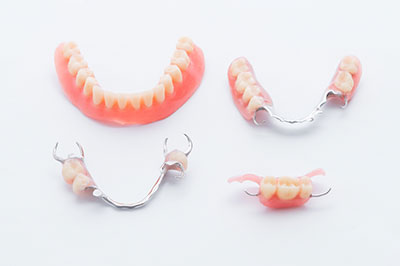
The two main types of dentures are: full dentures and partial dentures. Both types are custom fabricated based on the exact specifications obtained from dental impressions and detailed functional as well as esthetic information provided by the dentist.
Full Dentures
Full dentures, which can also be referred to as, “complete dentures,” are designed to replace all of the upper or lower teeth. A complete maxillary denture, more commonly known as a, full upper denture, typically consists of a base that covers the roof of the mouth with a full complement of artificial teeth set around the section covering the dental arch. On the other hand, a complete mandibular denture, or full lower denture, is designed to accommodate the tongue and is horseshoe shaped with teeth set along the portion that covers the underlying dental arch.
Partial Dentures
A partial denture is a type of removable prosthesis that is designed to restore a complete and functional smile in cases where multiple teeth are missing or require extractions, while some healthy teeth remain in the dental arch. Custom fabricated for a precise fit and cosmetically pleasing appearance, partial dentures are typically secured and stabilized with clasps or precision attachments to select teeth adjacent to the edentulous areas. Depending upon the number of teeth being replaced as well as the functional and aesthetic requirements of the case, a partial denture can be fabricated from a combination of cast metal and acrylic materials, acrylic alone, or thermoplastic resins such as ValplastTM, Flexite®, Duroflex® and tcs®.


Dentures are removable prosthetic appliances that replace missing teeth and the supporting structures of the mouth. They consist of artificial teeth set in a base that conforms to the gums and distributes chewing forces across the jaw. Dentures restore basic functions such as eating and speaking while also helping maintain facial contours.
Modern materials and laboratory techniques make dentures more natural-looking and comfortable than earlier designs. Proper fit depends on accurate impressions, correct bite relationships, and precise lab work to match tooth position and shade. When combined with regular follow-up, a well-made denture can provide reliable function and an improved quality of life.
There are several denture styles including full (complete) dentures, partial dentures, overdentures, and implant-supported prostheses. Choosing between them depends on how many teeth remain, the condition of the gums and bone, and the patient’s goals for comfort and appearance. Partial dentures fill gaps and help prevent neighboring teeth from drifting, while full dentures replace all teeth in an arch. Overdentures and implant-supported options increase stability by using retained roots or implants for anchorage.
Your dentist will evaluate oral health, discuss the advantages and limitations of each approach, and recommend options that align with your lifestyle. Considerations include retention, maintenance, and the expected changes in oral tissues over time. A shared decision-making process helps ensure your denture meets functional needs and esthetic expectations.
Full, partial, and immediate dentures serve different clinical roles and are selected based on timing and the number of missing teeth. A conventional full denture is made after tissues have healed following extractions, which typically yields a more predictable long-term fit. A partial denture is anchored to remaining teeth and preserves space while restoring function.
An immediate denture is fabricated in advance and placed at the time teeth are removed so the patient does not go without teeth during healing. Immediate prostheses provide immediate esthetics and function but usually require relines or adjustments as the tissues remodel. Your dentist will explain the trade-offs and follow-up required for each approach.
Implant-supported dentures attach to strategically placed dental implants to provide enhanced retention, stability, and chewing efficiency. They can be fixed or removable depending on the case and patient preference, and often require fewer compromises in diet compared with conventional dentures. Because implants preserve bone and provide solid anchorage, they can vastly improve comfort for many patients.
Good candidates for implant-supported dentures are patients with adequate bone volume or those willing to undergo bone grafting when indicated, and who are in general good health. A comprehensive evaluation including imaging and medical history helps determine implant suitability and the number of implants needed. Your dental team will coordinate surgical and prosthetic phases to create a predictable treatment sequence.
The process of creating a custom denture begins with a detailed medical and dental history, oral examination, and diagnostic imaging when needed to assess bone and soft-tissue conditions. Accurate impressions and bite records capture the exact anatomy and jaw relationships required for function. A trial setup allows patients and clinicians to evaluate tooth position, shade, and overall esthetics before the final prosthesis is fabricated. At Riverbend Family Dental our clinicians emphasize careful communication with the laboratory to translate clinical findings into a well-fitting denture.
After insertion, follow-up visits are scheduled to make minor adjustments, address sore spots, and refine occlusion as tissues adapt. Relines or repairs may be needed over time to maintain fit as the mouth changes. Long-term success depends on maintenance, timely professional care, and good home hygiene.
Most patients require a few weeks to adapt to a new denture, with common early experiences including increased saliva, minor speech changes, and temporary sore spots. Practicing speaking aloud, starting with soft foods, and gradual increases in chewing complexity help rebuild comfort and confidence. Following the insertion instructions provided by your clinician reduces irritation and speeds adaptation.
If persistent discomfort or difficulty chewing continues beyond the expected adaptation period, a follow-up appointment should be scheduled to assess fit and occlusion. Small adjustments to the denture surface or occlusal contacts often resolve problems quickly. In some cases, alternative retention strategies such as adhesives or implant support may be recommended.
Daily care for dentures includes rinsing and brushing the appliance after meals to remove food debris and plaque. Use a soft denture brush or a soft-bristled toothbrush and a nonabrasive cleanser designed for dentures to avoid scratching surfaces. Soaking dentures overnight in plain water or a manufacturer-recommended cleanser helps keep them hydrated and sanitary.
Clean any remaining natural teeth, gums, tongue, and palate with a soft brush to maintain tissue health and prevent irritation from trapped debris. Avoid harsh household cleaners, bleach, or abrasive tools that can damage the denture base or teeth. Store dentures safely when not worn to prevent accidental damage and bring them to dental visits for professional inspection.
Regular dental checkups are important even for denture wearers so clinicians can evaluate tissue health, fit, and function. Checkups also allow for timely relines, repairs, or adjustments to restore comfort and chewing efficiency. How often you need these services depends on individual factors such as tissue changes and wear patterns.
As a guideline, many patients benefit from an annual review, while others may require more frequent visits during the first year after insertion or following major oral changes. Prompt attention to looseness, sore spots, or changes in speech helps prevent complications and improves long-term outcomes. Your dentist will recommend a personalized recall schedule based on your clinical findings.
Dentures can affect speech, chewing, and facial appearance, but properly designed prostheses aim to restore these functions as naturally as possible. Speech adjustments typically improve as you adapt and as the denture contours are refined to support clear articulation. Chewing efficiency may be reduced compared with natural teeth, but careful tooth selection and occlusal balance can optimize performance and comfort.
Well-fitting dentures also restore facial support, reducing the sunken appearance that can follow tooth loss. Patients at Riverbend Family Dental receive tailored guidance on exercises and diet progression to speed adaptation and maintain nutrition while avoiding unnecessary strain on new dentures. If persistent problems occur, the clinical team will evaluate fit, occlusion, and the need for alternative retention solutions.
Consider replacing a denture when it becomes loose, causes persistent sore spots, shows significant wear, or no longer meets your functional or esthetic expectations. Changes in jawbone and soft tissues over time can alter fit and require relines or new prostheses to restore proper function. Regular assessments help determine when repair or replacement is the appropriate course.
If ongoing problems persist, discuss alternative treatments with your dentist such as implant-supported options or different prosthetic designs that may offer improved stability. A thorough clinical evaluation including imaging can clarify whether additional procedures like implants or tissue management would benefit your situation. Making an informed decision with your dental team ensures the chosen approach aligns with your oral health goals and lifestyle.

Ready to transform your dental experience?
At Riverbend Family Dental, our team makes achieving optimal oral health easy and stress-free. From routine check-ups to treatments like Invisalign, we provide clear communication and patient-focused care every step of the way.
Getting started is simple—call, email, or use our online portal to schedule a visit and have your questions answered by our experts. Don’t wait—contact Riverbend Family Dental today and experience compassionate, precise care for your smile.