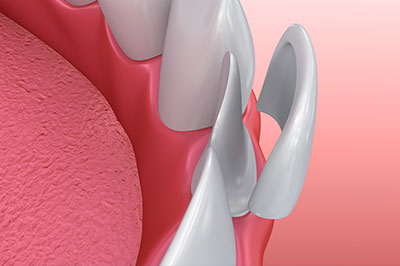
For teeth with imperfections that cannot be addressed with teeth whitening procedures, but are not so flawed as to require full coverage crowns, dental veneers can provide the desired cosmetic improvements.
Dental veneers are custom-fabricated facings that offer a conservative and cosmetically pleasing way to improve the appearance of teeth that are chipped, gapped, worn, slightly crooked, misshapen or darkly stained. With dental veneers, the color, shape, size, and length of the teeth can be changed for the better. Bonded to the front surfaces of the teeth, veneers can be used to enhance the appearance of a single tooth or multiple anterior teeth.
The two most common types of veneers are porcelain veneers, which are also known as porcelain laminates, and composite veneers. While porcelain veneers are the most commonly offered option in care, composite veneers can also achieve excellent results. Starting with a smile makeover consultation and a comprehensive assessment of a patient’s oral health as well as a discussion of the cosmetic goals, the dentist will determine a treatment plan to achieve the most pleasing outcome of care.
Porcelain Veneers
Porcelain veneers are ultra-thin facings that are custom fabricated from the highest grade of dental ceramics and offer the following benefits:
Composite Veneers
When direct composite veneers are the selected method of care, the dentist applies carefully selected shades of tooth-colored composite resins to the fronts of the involved teeth. As the composite resin is placed, it is meticulously sculpted to create the desired shape, length and overall form of each tooth. Each layer of applied composite is then cured with a special light, and additional layers of composite are placed as required to achieve an aesthetically pleasing and functional result. Once the final result is completely set, the dentist will smooth and polish the direct composite veneers to a naturally brilliant finish.
While composite veneers frequently offer the advantages of being a single visit procedure, easy to repair and an economical alternative to porcelain veneers, they are not as strong or resistant to staining and wear as dental ceramics. However, by avoiding certain dietary choices and habits, practicing good oral hygiene and getting routine dental care, direct composite veneers can offer an effective and long lasting cosmetic smile improvement.


Dental veneers are thin shells bonded to the front surfaces of teeth to change their color, shape or size. They act as a protective layer and can correct cosmetic issues such as chips, discoloration and minor spacing problems. Veneers are crafted from materials like porcelain or composite resin, each chosen for specific aesthetic and functional properties.
Once bonded, veneers integrate with the natural tooth structure to provide a long-term cosmetic improvement while preserving most of the underlying tooth. The bonding process uses dental adhesives that create a strong mechanical and chemical connection, helping the veneer resist everyday forces from biting and chewing. Regular dental care and checkups ensure the veneers continue to perform as intended and identify any maintenance needs early.
Good candidates for veneers are patients with generally healthy teeth and gums who want to address cosmetic concerns such as staining, small chips, uneven edges or mild gaps. Candidates should be free of active tooth decay and untreated periodontal disease, because these conditions need to be managed before veneer placement. A dental exam and diagnostic imaging help determine whether veneers are the most appropriate option based on enamel thickness and bite dynamics.
Patients with heavy teeth grinding or severe misalignment may require additional treatment or protective measures to improve long-term outcomes. The dentist will discuss alternatives such as orthodontics, crowns or composite bonding when veneers are not the ideal choice. Informed consent and realistic expectations are important parts of the evaluation to ensure patients understand benefits and limitations.
The two most common veneer materials are porcelain and composite resin, each with distinct characteristics. Porcelain veneers are handcrafted, highly stain resistant and closely mimic natural tooth translucency, making them a popular choice for durable cosmetic results. Composite veneers are applied directly in the mouth or fabricated in a lab, are more conservative of tooth structure in some cases, and can be repaired more easily if damaged.
Material choice depends on aesthetic goals, functional demands and the clinical condition of the teeth. Porcelain typically offers superior longevity and aesthetics, while composite can be a more conservative or interim solution. Your dentist will review the trade-offs and make a recommendation tailored to your needs and oral health.
The veneer process begins with a consultation and comprehensive exam at the office of Riverbend Family Dental in St. Paul, MN to confirm suitability and discuss aesthetic goals. Diagnostic records such as X-rays, photographs and digital scans or impressions are taken to plan the case and create a mockup when appropriate. The team will review material options, shade selection and the expected treatment timeline so patients understand each step.
Preparation typically involves conservative enamel reshaping, followed by impressions for lab fabrication or in-office fabrication when available. Temporary restorations may be placed while porcelain veneers are made, and final bonding is completed at a follow-up appointment with precise adjustments to fit, color and bite. Post-placement care instructions and follow-up visits help ensure the veneers settle in comfortably and function as intended.
Caring for veneers is similar to caring for natural teeth and includes daily brushing with a nonabrasive toothpaste and regular flossing to maintain healthy gums and prevent decay at the margins. Routine dental visits for professional cleanings and examinations are essential to monitor the condition of the veneers and surrounding oral tissues. Avoiding habits that place excessive force on veneers, such as biting fingernails or chewing hard objects, reduces the risk of chipping or fracture.
If you grind or clench your teeth, your dentist may recommend a custom night guard to protect veneers from undue stress during sleep. While veneers are stain resistant, maintaining good oral hygiene and minimizing exposure to heavy staining substances help preserve their appearance. Promptly report any changes such as sensitivity, looseness or chipping so the practice can evaluate and address concerns early.
The lifespan of veneers varies by material, oral habits and maintenance, but well-cared-for porcelain veneers can last many years before replacement is considered. Factors that affect longevity include the quality of the initial bonding, the patient’s bite alignment, oral hygiene practices and habits such as teeth grinding or chewing hard foods. Regular dental care and early management of issues like gum disease or tooth decay at veneer margins support a longer service life.
Composite veneers generally have a shorter lifespan than porcelain and may require more frequent repairs or maintenance. Proper case selection and following the dentist’s aftercare recommendations significantly influence how long veneers remain functional and attractive. Periodic evaluations allow the dentist to monitor wear patterns and plan preventive steps to extend veneer life.
Veneers are often considered irreversible when enamel removal is necessary, because enamel does not regenerate and the tooth will typically require a restoration thereafter. Some minimal-prep or no-prep veneer options exist that preserve more enamel, but suitability depends on the individual case and desired outcome. It is important for patients to understand the long-term commitment involved with conventional veneers before proceeding.
During the consultation, the dentist will explain how much tooth structure may be altered, what alternatives are available and what to expect in terms of maintenance and potential replacement. Informed decision-making includes reviewing diagnostic models and temporary mockups when possible so patients can visualize the planned changes. Clear communication about risks, benefits and alternatives helps patients make a confident choice that meets their aesthetic and functional goals.
Veneers can correct minor alignment issues, small overlaps or mild rotations by changing tooth shape and surface appearance, but they are not a substitute for comprehensive orthodontic treatment in more significant malocclusions. For moderate to severe misalignment, orthodontic therapy such as clear aligners or braces is often recommended first to achieve proper function and tooth position. Addressing alignment before veneers can improve long-term outcomes and reduce unnecessary removal of tooth structure.
The dentist will evaluate bite relationships, tooth position and occlusal forces to determine whether veneers alone are appropriate or if combined treatment is advised. When veneers are used for alignment concerns, careful planning ensures even thickness and proper contacts to support oral health. A multidisciplinary approach provides predictable, stable results when both function and aesthetics are priorities.
Most patients experience minimal discomfort during veneer treatment because procedures are typically performed under local anesthesia when enamel reduction or bonding is involved. The dentist numbs the treatment area to prevent pain during preparation, and many patients report sensation similar to routine restorative work rather than significant pain. After the procedure, mild sensitivity or soreness is common but usually subsides within a few days and can be managed with over-the-counter analgesics as directed.
For anxious patients, the practice can discuss options to increase comfort during treatment, including relaxation techniques and sedation where appropriate and clinically indicated. Postoperative care instructions help reduce sensitivity and promote healing of the soft tissues. If unusual or prolonged pain occurs, patients should contact the dental office promptly for evaluation and follow-up care.
Veneers are a conservative cosmetic option designed to cover the front surface of a tooth, preserving more natural tooth structure compared with full crowns that encase the entire tooth. Crowns are typically recommended when a tooth has extensive damage, large restorations or structural compromise that requires full coverage for strength and protection. Other cosmetic choices such as whitening, bonding or orthodontics address different concerns and may be more appropriate depending on the specific clinical situation.
Choosing between veneers, crowns and alternative treatments involves evaluating the condition of the tooth, aesthetic goals and long-term function, and the dentist will recommend the most predictable solution. Riverbend Family Dental emphasizes evidence-based decision-making and will explain the benefits and limitations of each option so patients understand how the selected treatment aligns with their oral health needs. Collaboration between patient and clinician ensures a tailored plan that balances appearance, durability and conservation of tooth structure.

Ready to transform your dental experience?
At Riverbend Family Dental, our team makes achieving optimal oral health easy and stress-free. From routine check-ups to treatments like Invisalign, we provide clear communication and patient-focused care every step of the way.
Getting started is simple—call, email, or use our online portal to schedule a visit and have your questions answered by our experts. Don’t wait—contact Riverbend Family Dental today and experience compassionate, precise care for your smile.